How Hackers Use AI in 2026: Techniques, Examples & Risks
In January 2026, artificial intelligence has become a double-edged sword in cybersecurity. While defenders use AI for threat detection, malicious hackers are leveraging the same technology to launch more sophisticated, scalable, and evasive attacks. From generating convincing phishing emails to creating polymorphic malware, AI lowers the barrier for cybercriminals, enabling even low-skilled attackers to execute high-impact operations. This detailed guide explores the primary ways hackers exploit AI, real-world examples, emerging techniques, associated risks, and implications for the future of cyber threats.
1. AI-Powered Phishing and Social Engineering
Phishing remains the most common attack vector, but AI supercharges it by creating hyper-personalized and realistic lures. Tools like large language models (LLMs) generate flawless emails, texts, or scripts tailored to victims based on scraped social media data.
- AI analyzes public profiles to craft messages mimicking trusted contacts.
- Generative AI produces natural-sounding content in any language, bypassing grammar checks.
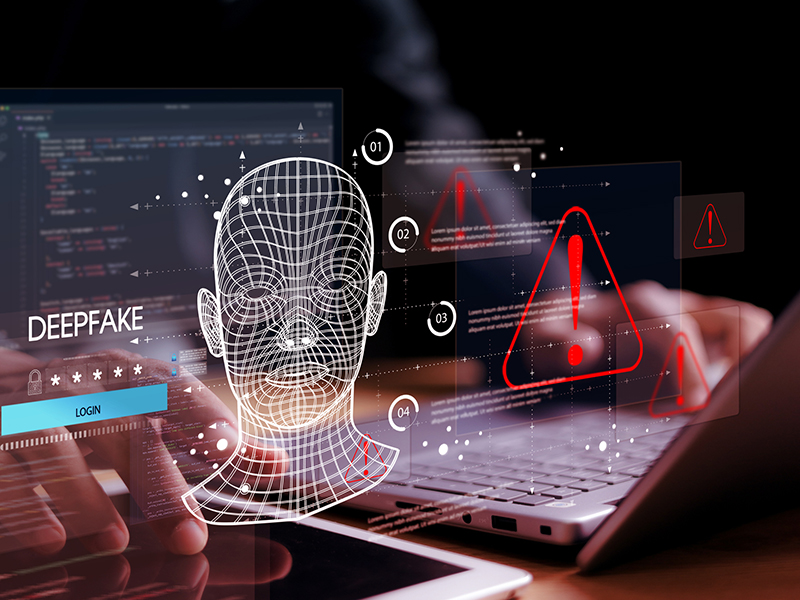
- Deepfake audio/video adds voice cloning for vishing attacks.
Real-world example: In 2024-2025 incidents, hackers used AI-cloned voices of CEOs to authorize fraudulent transfers, stealing millions from companies.
2. Generating and Obfuscating Malware
Hackers use AI to create new malware variants rapidly, making signature-based detection obsolete. Polymorphic malware changes its code signature with each infection, evading antivirus.
- AI tools like FraudGPT or WormGPT (dark web LLMs) write malicious code from simple prompts.
- Machine learning optimizes payloads for stealth and persistence.
- Generative models obfuscate code, adding junk instructions to confuse analysts.
Real-world example: Ransomware groups employ AI to customize attacks, targeting specific vulnerabilities and encrypting faster than manual methods.

3. Automated Vulnerability Discovery and Exploitation
AI accelerates reconnaissance by scanning networks for weaknesses at scale.
- Fuzzy testing powered by ML finds zero-days faster.
- AI maps networks, predicts configurations, and chains exploits.
- Reinforcement learning trains bots to navigate defenses autonomously.
Real-world example: AI agents in red team exercises (and real attacks) probe thousands of endpoints, identifying misconfigurations humans miss.
4. Deepfakes and Advanced Social Manipulation
Generative AI creates realistic fake media for blackmail, disinformation, or impersonation.
Hackers clone faces/voices from short clips, producing videos of targets saying compromising things.
Real-world example: Scams where AI-deepfaked relatives request emergency funds have surged, targeting elderly victims.
5. AI-Driven Password Cracking and Credential Stuffing
Machine learning enhances brute-force attacks by predicting common patterns or using GANs (Generative Adversarial Networks) to guess passwords intelligently.
AI prioritizes likely combinations based on leaked datasets.
6. Evasion Techniques Against Defenses
Adversarial AI crafts inputs that fool machine learning-based security tools, like altering malware samples to bypass classifiers.
Hackers test attacks against defender AI in simulated environments.
7. Risks and Future Implications
AI democratizes hacking, enabling script kiddies to perform nation-state level attacks. The asymmetry favors attackers, as AI tools are cheaper and more accessible on the dark web.
Emerging risks include autonomous botnets and AI-orchestrated multi-stage campaigns.
Conclusion
Hackers using AI in 2026 represents a paradigm shift in cyber threats—making attacks faster, smarter, and harder to detect. From personalized phishing to AI-generated malware and deepfakes, these techniques amplify damage while lowering entry barriers. Organizations and individuals must adopt AI-powered defenses, multi-layered security, employee training, and vigilance to counter this evolution. The arms race between offensive and defensive AI will define cybersecurity's future—staying informed and proactive is essential to mitigate risks in this increasingly dangerous digital landscape.