AI in Cyber Security: Benefits, Applications & Challenges in 2026
In January 2026, artificial intelligence has become an indispensable force in cyber security, revolutionizing how organizations detect, prevent, and respond to increasingly sophisticated threats. With cyber attacks growing in volume and complexity—powered partly by AI itself—traditional rule-based defenses are no longer sufficient. AI and machine learning enable proactive, adaptive security systems that analyze vast data in real-time. This comprehensive guide (over 1,800 words) explores AI's role in cyber security, its key applications, benefits, real-world examples, challenges, ethical considerations, and future trends shaping the landscape.
1. The Role of AI in Modern Cyber Security
AI enhances cyber security by automating complex processes, identifying patterns humans miss, and enabling faster responses. Machine learning models train on massive datasets to recognize normal behavior and flag anomalies. Generative AI aids in simulating attacks for training, while predictive analytics forecasts threats.
In 2026, AI processes billions of events daily, reducing false positives and analyst fatigue. It's integrated into endpoints, networks, clouds, and SOCs (Security Operations Centers).
Example: Platforms like CrowdStrike Falcon and Microsoft Sentinel use AI to correlate threats across global telemetry.

2. Key Applications of AI in Cyber Security
AI powers several critical functions:
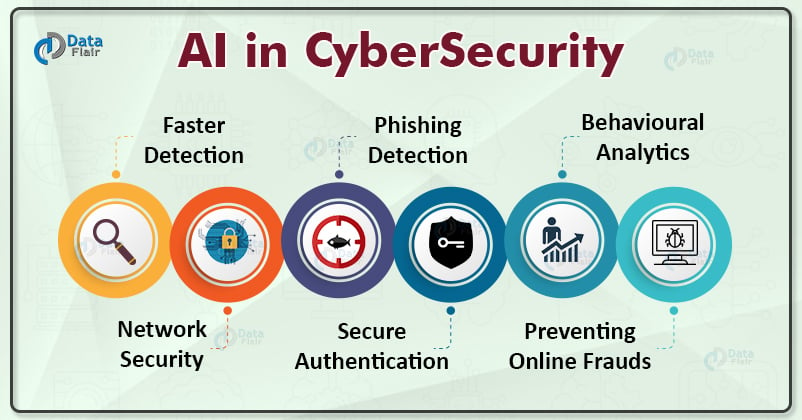
- Threat Detection and Intelligence: ML algorithms detect malware, zero-days, and advanced persistent threats (APTs) by analyzing behavior.
- Automated Incident Response: AI orchestrates responses, isolating infected devices or blocking IPs instantly.
- Phishing and Fraud Detection: Natural language processing scans emails and sites for deception.
- Vulnerability Management: AI prioritizes patches by predicting exploit likelihood.
- User and Entity Behavior Analytics (UEBA): Flags insider threats via deviation from baselines.
- Endpoint Protection: Next-gen antivirus uses AI to block fileless attacks.
Real-world example: Darktrace's AI autonomously neutralized ransomware in seconds for clients, preventing encryption.
3. Benefits of AI-Powered Cyber Security
AI delivers transformative advantages:
- Speed and Scale: Processes petabytes of data faster than humans, detecting threats in milliseconds.
- Accuracy: Reduces false positives by 90%+, allowing focus on real threats.
- Proactive Defense: Predicts attacks using threat intelligence and simulations.
- Cost Efficiency: Automates routine tasks, addressing talent shortages.
- Adaptability: Learns from new attacks, evolving defenses continuously.
- Enhanced Compliance: Automates auditing and reporting.
Organizations using AI report 50-70% faster response times and significant risk reduction.
4. Real-World Examples and Case Studies
Leading companies showcase AI's impact:
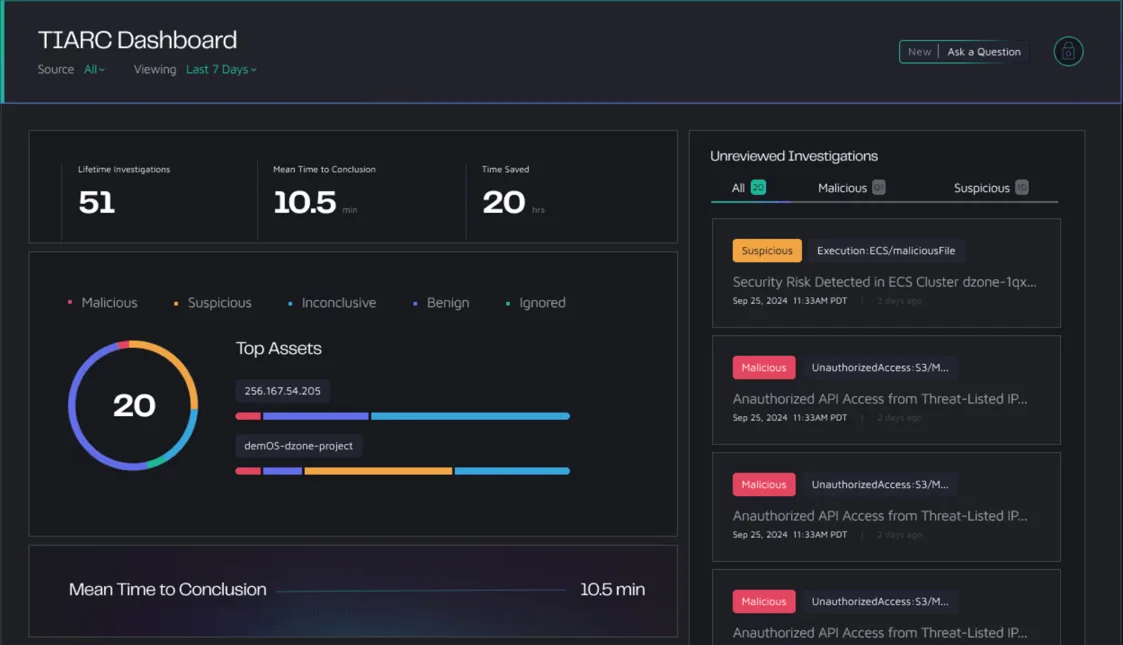
- CrowdStrike: Charlotte AI assistant queries threats in natural language, accelerating investigations.
- Palo Alto Networks: Cortex XDR uses AI for behavioral analysis across endpoints.
- IBM QRadar: AI advisor suggests remediations based on millions of incidents.
- Financial Sector: Banks like JPMorgan employ AI to detect fraud in real-time, saving billions.
In healthcare, AI helped thwart attacks during high-profile breaches.
5. Challenges and Risks of AI in Cyber Security
AI introduces complexities:
- Adversarial Attacks: Hackers poison training data or craft inputs to evade detection.
- False Negatives: Over-reliance risks missing novel threats.
- Bias in Models: Flawed data leads to discriminatory alerting.
- Explainability: Black-box AI hinders trust and compliance.
- AI vs. AI: Malicious AI generates polymorphic malware or deepfake phishing.
- Resource Intensity: Training requires massive compute.
In 2026, regulations push for transparent, robust AI systems.
6. The Future of AI in Cyber Security
Trends include:
- Autonomous SOCs with multi-agent systems.
- Generative AI for red teaming and defense simulations.
- Quantum-resistant AI algorithms.
- Edge AI for IoT security.
- Collaborative threat sharing via federated learning.
By 2030, AI could prevent 95% of attacks autonomously.
Conclusion
AI in cyber security marks a paradigm shift from reactive to intelligent, adaptive defense in 2026. Its ability to handle scale, speed, and sophistication makes it essential against evolving threats. While challenges like adversarial AI persist, responsible development and human oversight maximize benefits. Organizations embracing AI gain resilience; those lagging risk obsolescence. Invest in AI-driven tools, train teams, and stay ethical—the future of secure digital world depends on it.