AI Tools for API Development: Top Solutions & Trends in 2026
In January 2026, artificial intelligence is deeply integrated into API development, automating repetitive tasks, enhancing accuracy, and accelerating the entire lifecycle—from design and coding to testing, documentation, and deployment. Developers now use AI to generate endpoints, write boilerplate code, create tests, and maintain docs, reducing time-to-market significantly. This comprehensive guide (over 1,900 words) explores how AI transforms API development, the top tools available, real-world benefits and examples, challenges, and key trends shaping the future.
1. How AI is Transforming API Development
AI leverages large language models (LLMs), machine learning, and natural language processing to assist developers. It understands specifications like OpenAPI/Swagger, generates code in multiple languages, suggests improvements, detects vulnerabilities, and automates testing.
Key areas impacted:
- Design: AI suggests optimal endpoints, parameters, and schemas from natural language descriptions.
- Coding: Generates server stubs, clients, and handlers.
- Testing: Creates test cases, mocks, and validates responses.
- Documentation: Auto-generates interactive docs and keeps them updated.
- Security & Maintenance: Scans for vulnerabilities and suggests refactors.
In 2026, AI-native APIs support agent interactions via protocols like MCP (Model Context Protocol).
2. Top AI Tools for API Development in 2026
Here are the leading tools revolutionizing API workflows:
Postman with Postbot AI
The industry-standard API platform now features advanced AI for generating collections, tests, mocks, and documentation from descriptions or existing endpoints.
Features: Natural language test creation, automated workflows, visualizations.
Best for: Collaborative teams testing and documenting APIs.
Apidog
An all-in-one platform with powerful AI for design, debugging, testing, mocking, and documentation generation from code or specs.
Features: Auto-sync docs, smart mocking, AI assertions.
Best for: Full lifecycle management.

GitHub Copilot & Amazon Q Developer
Coding assistants that generate API handlers, clients, and integrations in IDEs.
Features: Context-aware suggestions, refactoring, error explanations.
Best for: Writing backend/frontend API code.
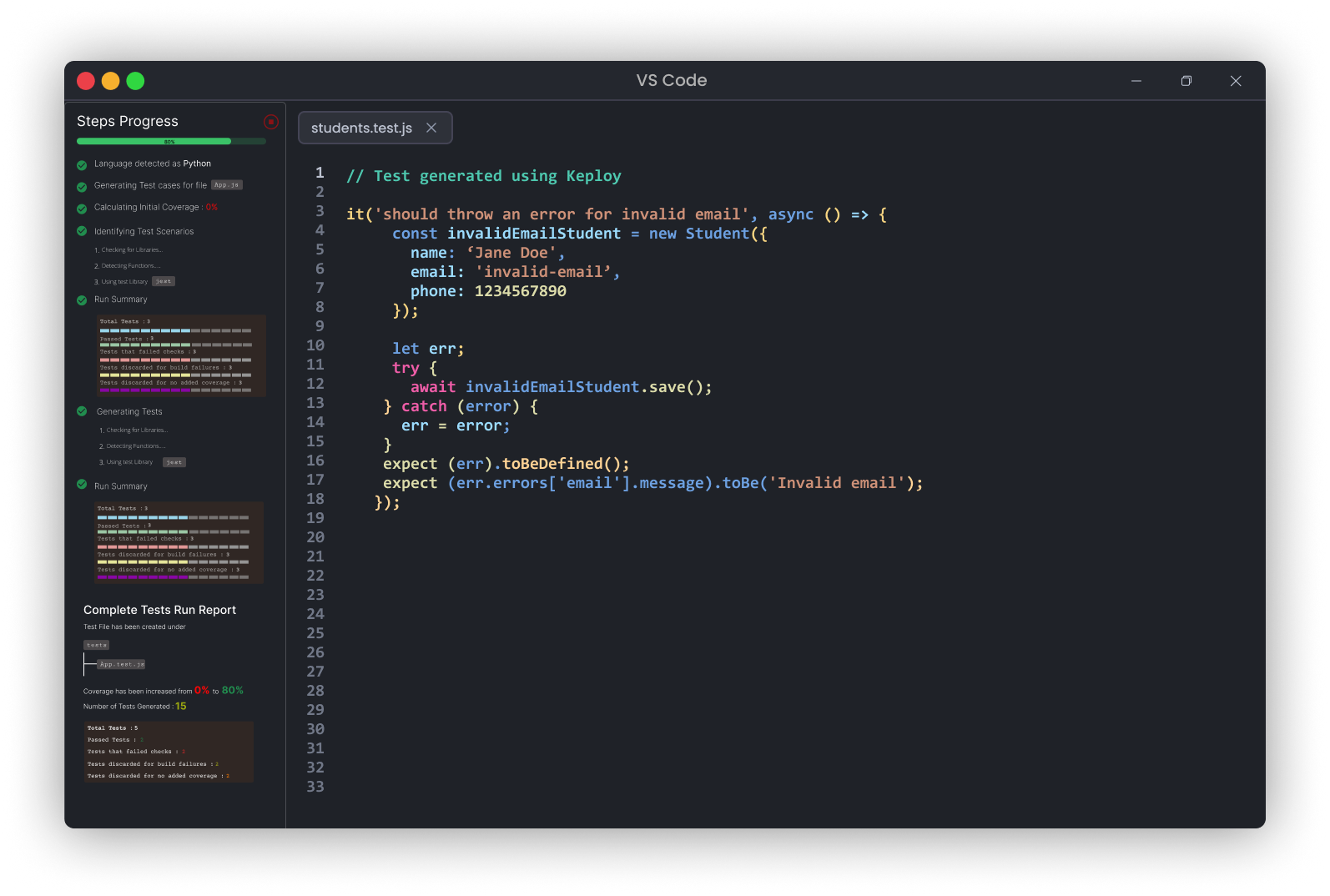
Keploy
AI-powered testing tool that records API calls and generates tests/mocks automatically.
Features: No-code test creation, integration with CI/CD.
Best for: Rapid API testing.
Stoplight & Mintlify
Design-first tools with AI for OpenAPI authoring, visual editing, and doc generation.
Features: Reusable components, mock servers, LLM-optimized docs.
Best for: API-first design and documentation.
Other Notable Tools
- Treblle Alfred: Explains and generates from docs.
- Parasoft SOAtest: Enterprise AI testing.
- Smol Developer: Generates full backends from prompts.

3. Benefits of Using AI in API Development
AI offers substantial advantages:
- Faster Development: Reduces boilerplate by 50-70%.
- Improved Quality: Catches errors early, ensures consistency.
- Better Collaboration: Auto-docs and mocks enable parallel work.
- Cost Savings: Automates manual tasks.
- Innovation: Focus on complex logic over repetition.
Teams report 30-50% faster iteration cycles.
4. Real-World Examples
Examples include:
- Prompting Copilot to generate Express.js routes from OpenAPI spec.
- Using Keploy to capture production traffic and auto-generate tests.
- Apidog syncing changes to interactive docs instantly.
- Postbot creating assertion tests from endpoint descriptions.
5. Challenges and Considerations
Challenges include:
- Hallucinations: Incorrect suggestions—always review.
- Security: Avoid exposing sensitive code to cloud tools.
- Context Limits: Large projects may need fine-tuning.
- Over-Reliance: Maintain core skills.
6. Future Trends in 2026 and Beyond
Trends:
- AI-native APIs for agent consumption.
- Autonomous full-stack generation.
- Deeper IDE integration with multi-agent workflows.
- AI governance for compliant APIs.
Conclusion
AI tools for API development in 2026 are essential for staying competitive, automating mundane tasks while enhancing creativity and reliability. Tools like Postman, Apidog, and Copilot lead the way, with more innovation ahead. Start integrating AI today—experiment with free tiers and watch your productivity soar. The future of API development is intelligent and automated.